
Let’s Simplify Email Marketing: The Email Strategy I Recommend at Each Stage of Business
If you’re running a service-based business, it’s time to talk about the one marketing asset that quietly outperforms every social platform, algorithm, and viral trend: your email list.
Unlike followers on borrowed platforms, your email list is an owned asset. It’s the most direct, personal, and profitable channel you have for building relationships, delivering value, and generating sales.
Yet so many business owners either delay starting one or ignore it altogether until they’re desperate for leads. If that’s been you—no shame. But it’s time to change that.
Email marketing isn’t just another thing on the to-do list. It’s the tool that turns curious people into loyal clients. It’s the tool that keeps on working while you're spending time with family, adventuring, sleeping, or finally catching up on that bingeworthy Netflix show.
And the way you approach email marketing should evolve as your business grows.
Today, I’m breaking down what email strategy looks like at three key stages of business: Startup, Growth, and Expansion. I’ll be sharing how I set these strategies up using Flodesk, my go-to email marketing platform for service-based businesses. That said, these strategies work across most modern platforms—so feel free to apply the guidance to your tool of choice.
Let’s dig in.
Stage One: STARTUP – Keep It Simple and Actionable
Welcome to the Startup era. You’re full of ideas, low on time, and probably juggling everything from design to delivery to remembering to drink water.
At this stage, here’s what matters most:
1. Bare minimum setup
A simple monthly or quarterly newsletter.
A signup form embedded on your site and shared on your socials.
The point isn’t to start publishing right away, it’s to start collecting subscribers. Embed the form in the footer of your website, on your homepage, blog page, or via a pop-up. This way, once you’re ready to start publishing, you already have a list to work with (no matter the size).
2. Lead magnet creation and delivery
A lead magnet is a free resource you offer in exchange for an email address. For example, this could be a a checklist, mini-guide, template, or recorded training. It should solve one small, meaningful problem for your ideal client, something valuable enough to feel like a win for your subscriber, and it should relate to your paid offer (this comes full circle later).
The biggest mistake I see? People overthink this step. Done is better than perfect. You can always iterate based on feedback and make adjustments to this resource for your audience later on.
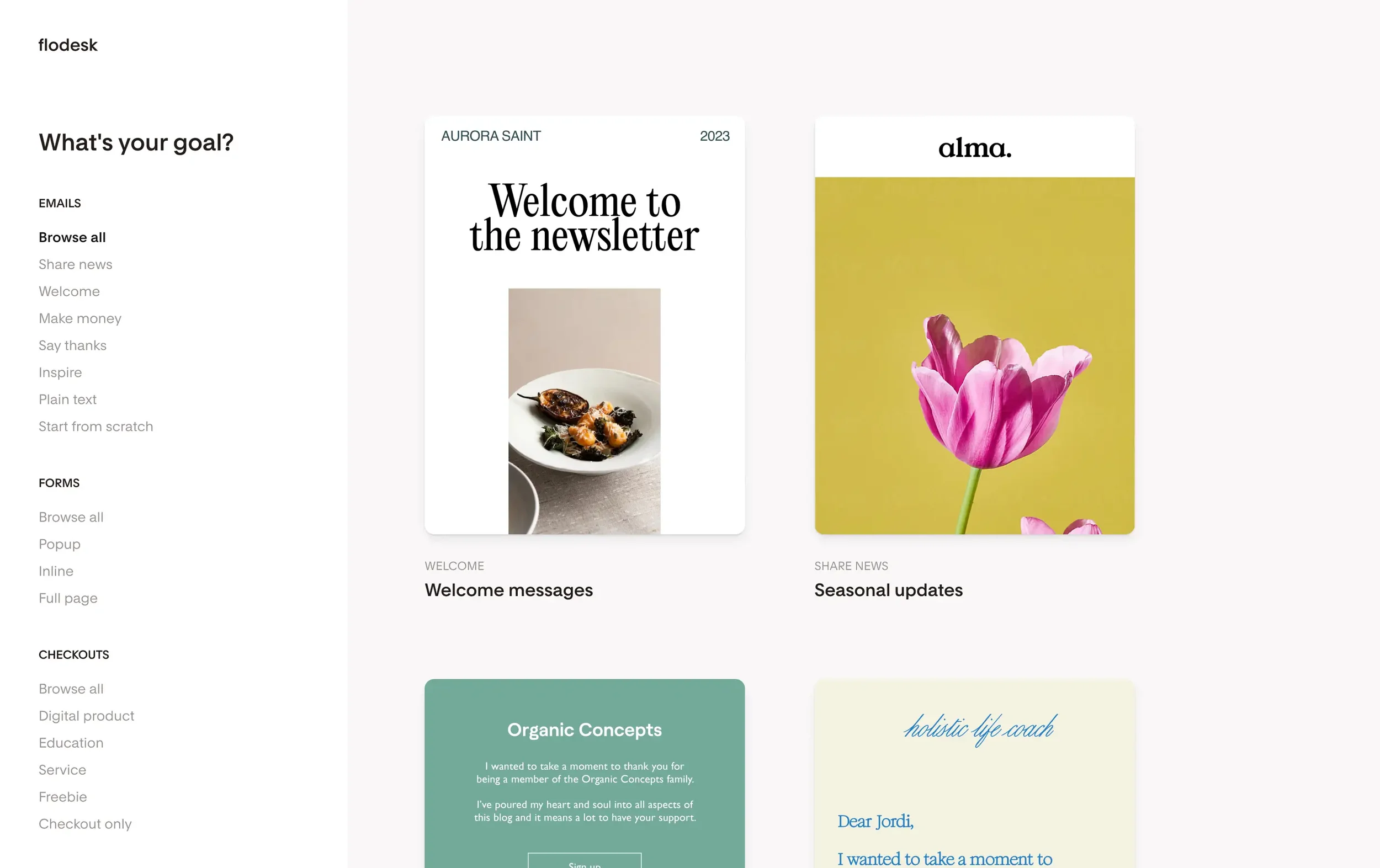
Set this up inside Flodesk with a branded form that connects to your lead magnet delivery sequence (and embeds into your website).
3. Simple Welcome Sequence (3-4 emails)
Once someone opts in, you need to greet them like a real human. Here’s a classic first-time-sequence:
Email 1: Deliver the freebie + short welcome note
Email 2: Share a quick tip that builds authority
Email 3: Tell a personal story (why you started, why it matters)
Email 4: Gently offer a next step (e.g., "book a call," "browse services")
This doesn’t have to be long or complex. And once it's built in Flodesk’s workflow builder, it runs on autopilot.
Don’t have a website yet?
No problem. Create a standalone landing page in Flodesk and share that link across your social channels and bio links.
Stage Two: GROWTH – Nurture and Convert
This is the stage where you're seeing traction. You’re selling offerings, booking clients, refining your services, and growing your list. But here’s the truth: if you haven’t updated your email strategy since you launched, it’s time to circle back and give it some love.
Here’s how to evolve:
1. Build segmented forms and workflows
You’re not just collecting names. You’re collecting information that helps you better connect people who are interested in what you have to offer with the best offerings for them.
I firmly believe that selling done right isn’t sleazy and doesn’t feel annoying or like you’re being a bother. You’re helping connect people who have a specific challenge with the correct solution for that challenge. When you communicate your offerings well, you help them better understand whether you’re their solution.
Use different tools to collect and organize the information that allows you to best segment your audience based on their journey in relation to your offerings.
Example 1:
Freebie A: “Website Launch Checklist” – Perfect for business owners prepping to launch their DIY website. These subscribers are likely newer to business, focused on getting online and looking for guidance on the essentials. They're at the beginning of their journey and may need support with branding, copy, and setup.
Freebie B: “The Clarity Map” – Tailored for more seasoned business owners who are 6+ months in, already serving clients, and now circling back to refine their brand and service structure. These folks have data from real-world clients, and they’re ready to evolve from “what works” to “what works even better.”
Example 2:
Lead Magnet Signup: A free mini-course, quiz, or downloadable resource tied to a specific pain point that also indicates what kind of support they’re looking for (e.g., tech setup vs. offer refinement).
Waitlist Signup: For an offer in development—this helps you gauge demand and segment subscribers who are already interested in a specific solution or service.
This allows for better personalization—and ultimately, better conversion.
2. Create a Nurture Sequence (5-6 emails)
This builds on your welcome sequence. Now that they know who you are, it’s time to deepen the relationship. Educate. Entertain. Deliver mini-wins. And yes, make sales offers when appropriate.
Topics can include:
A simple step they can take today that gets a result – Maybe it’s how to update a homepage headline to be more benefit-driven, or how to create a clear, high-converting call to action button. Something they can do in 10 minutes that makes a real difference.
A myth in your industry you want to bust – For example: “You need a massive email list to make sales.” Debunk it with a case study or client experience where a small, intentional list drove serious results.
Behind-the-scenes of a client project – Walk them through your creative process on a recent client project. Talk about the original challenge, your thought process, the solution you implemented, and the outcome. This builds authority and demystifies your service.
A resource or tool that’s been instrumental for your workflows or business – Instead of just recommending it, show them how you use it. Screenshots, Loom videos, or a few step-by-step instructions go a long way. The goal is to make it feel actionable and personal.
Pro-tip: build your emails off of storytelling. With so much AI around today, things can start to sound generic. A way to stand out from a sea of the same is to personalize your emails in a way that’s unique to you—and there’s no better way than storytelling.
3. Send consistent newsletters
This isn’t about churning out content for content’s sake. It's about building trust and staying top-of-mind, without adding more noise. A strong weekly or biweekly email should feel like a helpful nudge, not another obligation.
Here’s what you can include:
A short insight or story: Something timely, something relatable. Maybe it’s what you’re learning from a current project, or a quick mindset shift that helped you reframe a challenge.
A resource or link worth sharing: Reuse what you already have—your blog posts, podcast episodes, Instagram carousels. You don’t need to reinvent the wheel every week, you can repurpose it.
A gentle reminder of how people can work with you: Don’t bury the call to action. It’s not “salesy” to tell people what you do—it’s helpful. If they have a challenge and you have a solution for that challenge, this benefits you both. Add a sentence or two that guides readers to your offers, services, or next steps.
Use Flodesk’s template builder to create a plug-and-play format that saves time and keeps your brand consistent. It’s like having a branded email assistant without the payroll.
4. Use engagement metrics to make decisions
Open rates, click-through rates, unsubscribes—they’re all breadcrumbs leading you toward what resonates (and what falls flat).
Here’s what to look at:
Subject lines: Are people opening? Which formats, lengths, or tones get more attention?
Clicks: Where are people clicking? Which links draw attention—and which ones are getting ignored?
Workflow drop-offs: If people are exiting a sequence early, it’s a sign to review that email. Maybe the tone shifted too quickly or the CTA wasn’t clear.
Flodesk makes all of this beautifully digestible with both high-level dashboards and individual email performance insights. You don’t have to be a data analyst—you just have to be curious enough to adjust and experiment based on what the numbers are telling you.
Stage Three: EXPANSION – Launch and Lead
By the time you reach Expansion, your business isn’t just working—it’s scaling with systems. You’ve dialed in your audience (or audiences), mapped out an intentional offer ladder, built a recognizable brand presence, and you’re moving with a clear sense of direction. At this stage, email marketing isn’t just a background system—it’s a key revenue engine. One that’s built to nurture, convert, and support your bigger vision without constant hand-holding.
Your business is no longer reliant on hustle. It runs on systems, and email marketing should be one of your most sophisticated and leveraged ones.
Time to fine-tune your system for scale:
1. Build Launch Campaigns
Launches can (and should) feel organized and intentional—not chaotic. At this stage, your campaigns need to do more than just announce something new. They should strategically walk your audience through the buying journey.
Think of your sequence in three core parts:
Pre-launch: This is where you build anticipation and nurture objections. Educate your audience, create curiosity, and help them see why this solution might be exactly what they’ve been looking for.
Launch: Announce your offer, highlight the benefits, share testimonials or case studies, and answer common objections. This is when you’re most visible—don’t be afraid to show up with energy and clarity.
Post-launch: Keep momentum going with waitlist invites, follow-up resources, and behind-the-scenes insights. This is where long-term trust is built, even with those who didn’t buy this time around.
You can create each sequence inside Flodesk as a custom workflow, triggered by specific forms, tags, or actions. And remember: visibility matters. We oftentimes fall into the thought trap that we’re annoying our audience by sending too many emails—but most subscribers don’t see every message. Strategic repetition is your friend.
2. Re-engagement and Reactivation Sequences
If you’ve been building your list for a while, you’ve probably got some subscribers who haven’t opened your last few emails. That doesn’t mean they’re lost—it means it’s time to reintroduce yourself and reset the relationship.
Run a re-engagement sequence with subject lines like, “Still interested in [topic]?” or “Do you still want to hear from me?” Then offer them the chance to opt into more relevant content (or opt out). The goal isn’t to shrink your list—it’s to get crystal clear on your audience.
Bonus: A clean list = better deliverability and more accurate metrics heading into your next campaign.
3. Deep-Dive Analytics That Guide Your Next Steps
At this level, email becomes one of your sharpest community-building and growth tools. You’re no longer guessing what resonates—you’re letting the data lead.
Use Flodesk’s advanced analytics to answer questions like:
What content drives the most link clicks?
Which calls to action lead to conversions or inquiries?
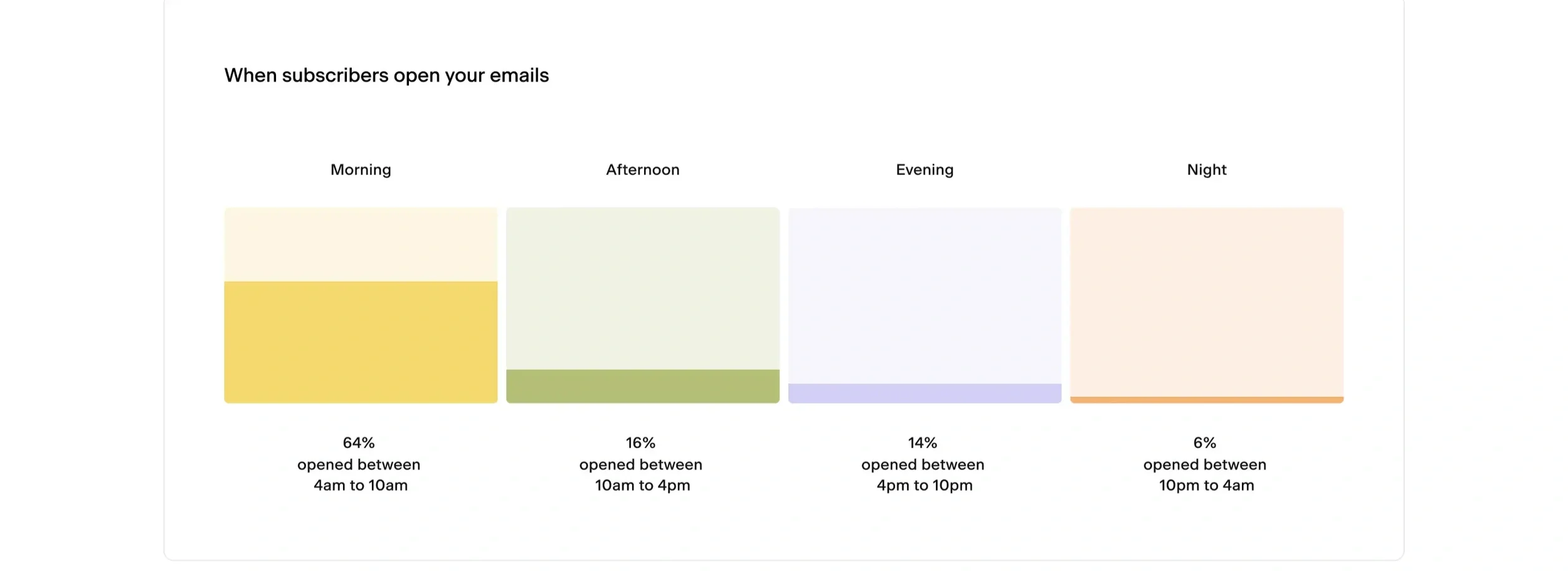
When are your subscribers most active, and how does that align with your send times?
Which sequences are creating engagement drop-offs?
This isn’t just about improving open rates, it’s about creating a feedback loop that refines your entire marketing approach. You’re shaping offers, content, and messaging based on what your audience is responding to.
So, What Stage Are You In?
Whether you’re getting your very first opt-in live or mapping out a multi-email launch sequence, your email strategy should match the season of your business. There’s no one-size-fits-all—and that’s the beauty of it. Your system should evolve with you.
Maybe you're in the “I just need to start somewhere” phase. Maybe your list is growing and you’re ready to segment, personalize, and finally send emails that speak directly to your people. Or maybe you're scaling fast and need a streamlined backend that supports your next big move.
Wherever you are, a few things stay true:
You need a platform that works with you.
You need a system that feels aligned with your brand.
And you need automations that bring you more peace in your business.
That’s why I’m still ride-or-die for Flodesk—and why every client I work with walks away with more than just a website. They leave with a system that makes their marketing smarter, simpler, and actually sustainable.
If you're ready to build or refine your email strategy, whether you’re starting from scratch or optimizing what’s already in motion, use my Flodesk partner link to get 25% off your first year.
Because your business doesn’t just need another tool.
It needs a system that works quietly and powerfully behind the scenes - so you don’t have to.


